Monday, January 22, 2024

Captivating Title Ideas for Ram Mandir Pran Pratishtha

 Captivating Title Ideas for Ram Mandir Pran Pratishtha in English: 


Focusing on the Historical Significance:

  • Ayodhya Reclaimed: Dawn of a New Era - Ram Mandir Consecration
  • India's Soul Rekindled: Rama's Abode Rises in Ayodhya
  • A Century-Long Journey Culminates: Witnessing the Ram Mandir Pran Pratishtha
  • Beyond Bricks and Mortar: A Nation's Faith Triumphs in Ayodhya
  • A Testament to Resilience: Ram Mandir Rises from the Ashes of Ayodhya

Highlighting the Spiritual Importance:

  • Divine Abode Ascends: Ram Mandir Consecration Ushers in a New Dawn
  • Ram Lalla Finds His Home: Ayodhya Celebrates the Pran Pratishtha
  • Where Faith Resonates: The Spiritual Essence of Ram Mandir's Consecration
  • A Beacon of Hope: Ram Mandir's Consecration Brings Renewed Faith to India
  • Echoes of Devotion: Ayodhya Rejuvenated as Ram Mandir Opens its Doors

Emphasizing the Cultural Significance:

  • India's Heritage Resplendent: Ram Mandir Consecration Embraces Tradition
  • A Symphony of Stone: Architectural Marvels of the Ram Mandir
  • From Temple Town to Spiritual Hub: Ayodhya Transformed by Ram Mandir
  • Echoes of Ramayana: Timeless Epic Resonates in Ayodhya's New Chapter
  • Bridging Centuries: Ram Mandir Consecration Connects Past, Present, and Future

Evoking Emotional Resonance:

  • Dreams Materialize: A Nation Celebrates the Ram Mandir Consecration
  • Tears of Joy, Prayers Answered: Ayodhya Witnesses a Historic Day
  • Unity in Diversity: Ram Mandir Consecration Unites India in Devotion
  • Faith Takes Center Stage: Ayodhya Basking in the Glow of Ram Mandir
  • A Symphony of Light and Song: Ram Mandir Consecration Fills Ayodhya with Joy

Remember, the best title will depend on the specific focus and tone of your writing. Choose one that captures the essence of the event and resonates with your audience.

I hope these suggestions help you find the perfect title for your piece about the Ram Mandir Pran Pratishtha!

Sunday, January 21, 2024

Chineese New Year Facts

 Chineese New Year Facts

Certainly! The Chinese New Year, also known as the Spring Festival or Lunar New Year, is a significant traditional festival celebrated by Chinese communities around the world. Here are some interesting facts about Chinese New Year:

  1. Date: Chinese New Year is based on the lunar calendar and typically falls between January 21 and February 20.

  2. Chineese New Year Facts


  3. Zodiac Animals: Each Chinese New Year is associated with one of the 12 animals in the Chinese zodiac. 2022, for example, is the Year of the Tiger.

  4. Celebration Duration: The festival is celebrated for 15 days, starting from the first day of the lunar calendar and culminating with the Lantern Festival on the 15th day.

Chineese New Year Facts


  1. Reunion Dinner: On the eve of Chinese New Year, families gather for a reunion dinner, known as "Nian Ye Fan." It is considered the most important meal of the year, emphasizing family unity.

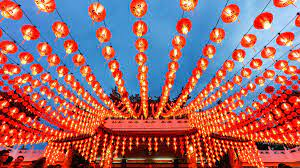
  2. Red Decorations: Red is the dominant color during Chinese New Year as it symbolizes good luck and prosperity. People decorate their homes with red lanterns, couplets, and other red ornaments.

  3. Fireworks and Firecrackers: The festival is known for vibrant fireworks displays and the loud sounds of firecrackers. This tradition is believed to drive away evil spirits and bring good luck.

Chineese New Year Facts


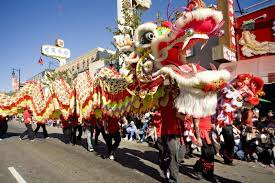
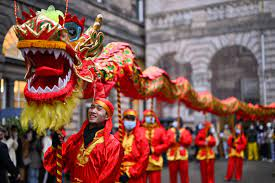
  1. Lion and Dragon Dances: Colorful lion and dragon dances are performed during the celebrations, often accompanied by loud drums and cymbals. These dances are believed to bring good fortune and drive away evil spirits.

  2. Gift-Giving: It is customary to exchange red envelopes, called "hongbao" or "lai see," containing money as a symbol of good luck and prosperity. Married couples often give these envelopes to unmarried relatives or friends.

Chineese New Year Facts


  1. Cleaning and Decluttering: Prior to the New Year, families engage in thorough cleaning and decluttering of their homes to sweep away any bad luck and make room for good fortune.

  2. Festival Food: Traditional Chinese New Year foods hold symbolic meanings. For example, fish symbolizes surplus, dumplings represent wealth, and sweet rice cakes signify a prosperous year.

    Chineese New Year Facts

  3. The Year of the Rat: The most recent Year of the Rat was in 2020. Each zodiac animal is believed to influence the personality traits and events of the year it represents.

These are just a few aspects of the rich cultural tapestry of the Chinese New Year celebration. The customs and traditions can vary across regions and communities, adding to the diversity of the festival.

Sunday, January 14, 2024

Makar Sankranti: A Celebration of Harvest, Sun, and New Beginnings

Makar Sankranti: A Celebration of Harvest, Sun, and New Beginnings

Makar Sankranti, a Hindu festival, is celebrated in India to mark the winter solstice and the beginning of the solar month Makara (Capricorn). It is one of the most important festivals in India, observed with great joy and fervour. Here are some facts about Makar Sankranti in 500 words with images:

1. Significance:

Makar Sankranti signifies the end of the inauspicious period of Kantakaa and the beginning of the auspicious Uttarayana. It is believed that the Sun enters the Capricorn zodiac sign (Makara) on this day, starting its northward journey. This northward movement of the Sun is associated with longer days, warmer weather, and the end of the harvest season.

2. Traditions and Rituals:

  • Taking a holy dip: People take a holy dip in rivers like Ganga, Yamuna, and Godavari during Makar Sankranti. It is believed that this dip washes away one's sins and brings good luck and prosperity.

  • Bonfires: Bonfires are lit on the eve of Makar Sankranti, symbolizing the burning of negativity and the ushering in of positivity. People offer prayers to the fire god Agni and seek his blessings.

  • Tilgul: Tilgul, a sweet dish made of sesame seeds, jaggery, and ghee, is an essential part of Makar Sankranti celebrations. It is believed that eating tilgul brings good health and prosperity.

  • Kite flying: Kite flying is a popular tradition associated with Makar Sankranti, especially in North India. The sky is filled with colourful kites of all shapes and sizes on this day. People compete with each other to fly their kites higher and cut the strings of other kites.

  • Rangoli: Women draw colourful rangolis in front of their homes on Makar Sankranti. Rangolis are believed to bring good luck and prosperity to the household.

  • Gifts and sweets: People exchange gifts and sweets with their loved ones on Makar Sankranti. This tradition strengthens bonds and spreads joy.

3. Regional variations:

Makar Sankranti is celebrated with different names and traditions in different parts of India. Some of the regional variations include:

  • Pongal in Tamil Nadu: Pongal is a four-day harvest festival celebrated in Tamil Nadu during Makar Sankranti. It is a time for thanksgiving to the Sun god Surya for a bountiful harvest.

  • Lohri in Punjab: Lohri is a bonfire festival celebrated in Punjab on the eve of Makar Sankranti. It is a time for庆祝农收获和冬季的结束。

  • Bihu in Assam: Bihu is a harvest festival celebrated in Assam during Makar Sankranti. It is a time for feasting, dancing, and merrymaking.

4. Makar Sankranti in Odisha:

In Odisha, Makar Sankranti is known as Makara Chaula. It is celebrated with great joy and fervour across the state. People take holy dips in rivers like Mahanadi and Baitarani. Bonfires are lit, and tilgul is offered to the fire god Agni. Kite flying is also a popular tradition in Odisha during Makar Sankranti.

Saturday, January 6, 2024

"Unleashing the Power: Exploring Fuel Cells and Their Revolutionary Impact What is a fuel cell?

 "Unleashing the Power: Exploring Fuel Cells and Their Revolutionary Impact What is a fuel cell?

fuel cell test


Fuel cell technology is at the forefront of sustainable energy solutions, offering a promising alternative to traditional combustion-based power sources. Within the context of space exploration, the utilization of fuel cells has gained substantial traction due to their efficiency, reliability, and environmentally friendly nature. Fuel cell test spaces serve as crucial environments for evaluating, refining, and advancing these innovative energy systems for space applications.


Understanding Fuel Cells:

Fuel cells generate electricity through electrochemical reactions, converting the chemical energy of a fuel, often hydrogen, directly into electrical power, with water and heat as byproducts. This technology holds immense potential for various space missions, providing continuous and clean energy for extended durations.

fuel cell test


Importance of Testing Spaces:

Fuel cell test spaces are specialized facilities designed to simulate space conditions, allowing for thorough assessments of fuel cell performance, durability, and safety in environments that mimic the challenges of space travel. These spaces are equipped with chambers, instruments, and testing rigs tailored to emulate the harsh conditions of outer space.

fuel cell test


Simulation Capabilities:

They replicate extreme temperatures, vacuum conditions, radiation exposure, and other factors encountered in space. Such simulations help engineers and scientists analyze how fuel cells withstand and function in these demanding scenarios, ensuring their reliability and efficiency during space missions.

Research and Development:

Within these test spaces, extensive R&D efforts focus on enhancing fuel cell technology. Researchers experiment with various fuel cell designs, materials, and configurations to optimize efficiency, durability, and power output, aiming for lightweight and compact solutions ideal for space missions.

fuel cell test


Performance Evaluation:

Testing spaces assess fuel cell performance under varying loads and environmental stresses, enabling the measurement of efficiency, power output, and response to different operational conditions. These evaluations aid in refining and validating the technology's suitability for space applications.

Safety and Reliability Assessments:

Safety is paramount in space missions. Test spaces simulate potential failure scenarios or malfunctions to evaluate the fuel cell's response, ensuring it meets stringent safety standards. Reliability testing also validates the technology's ability to function consistently over prolonged periods.

Advancements and Future Prospects:

Continuous advancements in fuel cell technology through test space evaluations pave the way for their integration into spacecraft, satellites, rovers, and habitats for sustained and eco-friendly power generation during missions. Future prospects involve the development of more efficient, durable, and cost-effective fuel cells for broader space exploration endeavors.

Conclusion:

Fuel cell test spaces play a pivotal role in advancing the frontiers of space technology by rigorously assessing and refining fuel cell systems, ultimately contributing to the realization of sustainable, reliable, and efficient power solutions for space missions. The ongoing research and development within these specialized environments continue to drive innovation, bringing humanity closer to exploring and inhabiting distant celestial bodies.


Wednesday, September 13, 2023

Kenya Exploring the Beauty and Diversity FACTS ABOUT COUNTRY KENYA

 Kenya - Exploring the Beauty and Diversity

Kenya  Exploring the Beauty and Diversity FACTS ABOUT COUNTRY KENYA

Kenya, located in the eastern part of the African continent, is a country known for its rich natural beauty, biodiversity, vibrant culture, and compelling history. This East African nation has captivated the world with its stunning landscapes, diverse wildlife, and unique cultural heritage. In this comprehensive overview, we'll delve into the fascinating facts and features that make Kenya a remarkable country.

Geography and Climate:

Kenya  Exploring the Beauty and Diversity FACTS ABOUT COUNTRY KENYA

Kenya boasts a diverse geography that includes everything from arid deserts to lush forests. Its total land area is approximately 580,367 square kilometers, making it the 48th largest country in the world. The country is bordered by Tanzania to the south, Uganda to the west, South Sudan to the northwest, Ethiopia to the north, and Somalia to the northeast. To the east, Kenya has a stunning coastline along the Indian Ocean.

Kenya's climate varies significantly depending on the region. The coastal areas have a tropical climate with high temperatures and humidity, while the interior parts experience more temperate conditions. Kenya generally has two rainy seasons - the long rains, which occur from March to May, and the short rains, which fall between October and December.

Capital and Major Cities:

Kenya  Exploring the Beauty and Diversity FACTS ABOUT COUNTRY KENYA

Nairobi, Kenya's capital and largest city, is the economic and political center of the country. It is a bustling metropolis known for its modern infrastructure, vibrant culture, and diverse population. Other major cities include Mombasa, Kisumu, Nakuru, and Eldoret.

Languages: Kenya is a multilingual country with a rich linguistic tapestry. English and Swahili are the official languages, and many Kenyans are fluent in both. Swahili is widely spoken and serves as a lingua franca for communication among people from different ethnic backgrounds. Additionally, Kenya is home to numerous indigenous languages, reflecting its ethnic diversity.

Population and Ethnicity: As of the last available data in 2021, Kenya's population stands at approximately 53 million people. The country is home to a multitude of ethnic groups, with the Kikuyu, Luo, Luhya, and Maasai being some of the largest and most prominent. Each ethnic group has its own unique traditions, languages, and cultural practices, contributing to Kenya's rich tapestry of diversity.

Kenya  Exploring the Beauty and Diversity FACTS ABOUT COUNTRY KENYA

History: Kenya's history is marked by a rich tapestry of ancient civilizations, colonization, and the struggle for independence. Archaeological evidence suggests that humans have inhabited the region for thousands of years. It was home to various African kingdoms and chiefdoms, including the powerful Swahili city-states along the coast.

In the late 19th century, Kenya came under British colonial rule as part of British East Africa. The struggle for independence gained momentum in the mid-20th century, with leaders like Jomo Kenyatta playing a significant role. Kenya finally achieved independence from British colonial rule on December 12, 1963, and Kenyatta became the country's first Prime Minister and later its first President.

Government and Politics: Kenya is a presidential republic with a multi-party system. The President is both the head of state and head of government. The country's political landscape is characterized by a vibrant democracy with periodic elections.

Kenya  Exploring the Beauty and Diversity FACTS ABOUT COUNTRY KENYA

The Kenyan Constitution, adopted in 2010, introduced significant reforms and devolution of power to counties, making Kenya a decentralized nation with 47 counties each governed by an elected governor.

Economy: Kenya's economy is one of the most developed in East Africa and has shown resilience and growth in recent years. It is classified as a middle-income country. The Kenyan economy is diverse and includes agriculture, manufacturing, services, and a growing technology sector.

Agriculture is a significant contributor to Kenya's economy, with key crops such as maize, tea, coffee, sugarcane, and horticultural products. Tourism is also a major driver of economic activity, with visitors drawn to Kenya's national parks, game reserves, and beautiful landscapes.

Natural Beauty and Wildlife: Kenya is renowned for its stunning natural landscapes and wildlife. The country is home to the "Big Five" game animals - lion, leopard, elephant, buffalo, and rhinoceros - making it a prime destination for safari enthusiasts. Some of the most famous national parks and wildlife reserves in Kenya include Maasai Mara, Amboseli National Park, Tsavo National Park, and the Great Rift Valley.

The Great Migration, an annual event where millions of wildebeest and zebras move between Tanzania and Kenya in search of fresh grazing, is one of the most spectacular wildlife phenomena on Earth and occurs in Maasai Mara.

Mount Kenya, Africa's second-highest peak, is a UNESCO World Heritage Site and a popular destination for trekkers and climbers.

Cultural Heritage: Kenya's cultural heritage is as diverse as its landscape. The country is known for its vibrant and colorful ceremonies, music, dance, and traditional clothing. Some of the well-known ethnic groups, like the Maasai, are easily recognizable by their distinctive attire, beaded jewelry, and intricate beadwork.

Kenyan music, influenced by various cultures and genres, has a unique and rhythmic sound that is enjoyed both locally and internationally. Traditional instruments like the nyatiti and the marimba are often used in Kenyan music.

Wildlife Conservation: Kenya has made significant strides in wildlife conservation and is committed to protecting its rich biodiversity. Several national parks, game reserves, and conservancies are dedicated to preserving endangered species and their habitats. Conservation efforts have helped increase the populations of iconic animals such as elephants, lions, and rhinos.

Cuisine: Kenyan cuisine reflects its diverse ethnic makeup. Ugali, a stiff porridge made from maize flour, is a staple food in Kenya and is often served with sukuma wiki (collard greens), nyama choma (grilled meat), or fish. Street food is popular, and you can find delicious snacks like samosas and mandazi (doughnuts) being sold in bustling markets.

Education and Science: Kenya places a strong emphasis on education and has made significant progress in improving its education system. The country is home to several universities and institutions of higher learning, including the University of Nairobi and Kenyatta University. In recent years, Kenya has also shown promise in the field of space science and technology, with initiatives such as the launch of its first satellite, named "Kenya-1."

Challenges and Future Prospects:

Kenya  Exploring the Beauty and Diversity FACTS ABOUT COUNTRY KENYA

Despite its many strengths, Kenya faces several challenges, including poverty, unemployment, and unequal access to resources. Political instability and corruption have also been persistent issues. However, the country has made progress in addressing these challenges and is working towards sustainable economic growth and development.

Kenya's future prospects look promising, with a growing middle class, a dynamic entrepreneurial spirit, and investments in infrastructure and technology. The country's strategic location and regional influence make it an important player in East Africa.

In conclusion, Kenya is a land of remarkable diversity, offering a breathtaking blend of natural beauty, cultural richness, and historical significance. From its picturesque landscapes to its vibrant cities, Kenya continues to captivate the world's imagination and remains a must-visit destination for travelers seeking adventure, wildlife encounters, and a taste of African culture.

Top Myths of World

  Top Myths of the World Myths have been passed down through generations, shaping cultures, beliefs, and stories throughout the ages. These...